...

DDM Informatics

Uncategorized

SEO COURSE IN BHOPAL
Uncategorized

SEO Course Bhopal

SEO Course Bhopal: Online SEO Mastery with Real-World Training by DDM Informatics Many people are searching for ‘SEO Course in Bhopal,’ and it isn’t difficult to see why. Everybody wants to increase their website visibility through better rankings on Google; however, very few of them know how to do this through SEO. If you would like to know how search engines rank websites and what you can do to improve your ranking using SEO, you have come to the right place! The best part is that you can learn SEO online. Today it is much easier for people to learn SEO because they do not have to attend a physical classroom setting. Online training offers the flexibility and ease of wrapping up your studies and training around your work schedule, school, or any other obligations or responsibilities that you have. If your goal is to actually learn SEO and obtain a certification while not wasting time or resources, then learning SEO online is a much better option. DDM Informatics specializes in providing an organized and guided online SEO course in Bhopal for everyone, including students, professionals, freelancers, and business owners alike. When you participate in our course, you will be able to access our training from any location you would like, at your own convenience, and learn about techniques that are currently being used in the real world! The Benefits of Online SEO Courses To be honest, taking an offline SEO course may not be feasible for everyone. Some people will have to deal with daily commuting, set class hours, and missing classes because of scheduling conflicts, which all delay the learning process. However, taking an online SEO course eliminates these issues. In our online SEO training course in Bhopal, you will: -Learn from the comfort of your home and at your own pace -Save time and money from commuting to class each week -Re-watch recorded classes whenever necessary -Receive hands-on guidance from qualified instructors -Utilize real-world projects instead of theory only Whether you work full-time or you’re a student or own a small business, an online SEO course in Bhopal provides you the flexibility to learn without pressure. About DDM Informatics—Your SEO Training Partner Online DDM Informatics specializes in teaching practical SEO that produces results, not just theory. Our instructors provide actual case studies where they demonstrate the use of SEO techniques on actual websites and how they can positively affect a website’s search engine ranking over time. While DDM Informatics offers its SEO course in Bhopal entirely online, we invest the time and resources to ensure our training materials are up-to-date and reflect Google’s changing algorithms and industry best practices. This way, you do not have to worry about whether you are learning outdated SEO techniques; instead, you will learn current and effective SEO strategies. Our SEO Training Is Taught In A Sequential Manner, With Basic Concepts Before Moving To More Detailed Information Using Live Demonstrations And Practical Exercises. The following subjects Will Be Covered: SEO Basics -Engine Functions -Understanding Organic Rankings -SEO Types: On-Page, Off-Page, Technical, Local -Keyword / Search Intent Research On-Page SEO (Practical Exercises) -Best Practices for Creating Title Tags & Meta Descriptions -How to Optimize Your Content for Search Engines While Still Being User-Friendly -How to Properly Use Headers & Internal Link Strategies -How to Improve the Loading Speed of Websites Through Image Optimization Technical SEO -Crawling & Indexing -An Overview of XML & Robots.txt Files -Understanding Core Web Vitals -Mobile-Friendly Website Optimization Local SEO & Google My Business -Keyword Targeting in Local Markets -How to Rank on Google Maps -How to Manage Your Business Reviews, Citations, and Obtain a High Level of Real-World -Visibility for a Local Business/ Off-Page SEO & Backlink Building -Building Quality Backlinks -Proper Guest Posting Techniques -Discovering Backlinks of Competitors -Practice Safe SEO and Avoid Penalties SEO Tools and Reports -Google Search Console -GA4 -Keyword Research Tools -SEO Audit/Report Creation Every Aspect of This Course is Supported with Real-World Examples of What Works and Why.   Online SEO Training Certificate is a certification program geared towards the practical application of Search Engine Optimization. Our online SEO program from Bhopal is not just a certificate for hanging on the wall, it is also a certificate validating your ability to perform Search Engine Optimization activities. During the course, you will be able to: -Work on Live SEO Projects -Audit Real Websites -Track Your Own Rank/Traffic -Prepare Reports & Create Strategies Used by Professionals When you complete the course, you will gain the confidence to apply for positions, take on clients as a freelancer, or manage your own SEO for your business. Who Should Take This Online SEO Course? This Online SEO Course in Bhopal is Perfect for: -Students who wish to break into Digital Careers -Working Professionals Who Want to Update Their Skills -Freelancers Who Want to Target International Clients -Individual Business Owners That Want Organic Leads -Bloggers and Content Creators No specific technical background is required, as all materials will be provided and discussed step by step. Career Directions After Completing the Online SEO Training Course Upon completion of our Online SEO Course in Bhopal, you will have a wide array of career options including: -SEO Executive -SEO Analyst -Digital Marketing Specialist -SEO Freelancer -SEO Consultant After finishing the SEO Course you will be ready to work on Remote Jobs OR Global Freelancing Opportunities Without Being Limited by Geography. What Makes DDM Informatics Different? -We offer live classes that allow students to engage with the instructor. -We have experienced SEO Trainers with ‘real-life’ skills. -Students learn using practical project experience with live assignments. -Our instructors use the latest best practices and strategies for developing SEO, as posted by Google. -DDM provides students with personalized support, career coaching, job readiness and assistance transitioning into work. DDM aims to prepare you so that you will be ready for employment in the field of SEO and have the confidence to work independently with clients in the future. By following the latest updates

Uncategorized

What Services Does an SEO Company Provide and How to Pick the Right One?

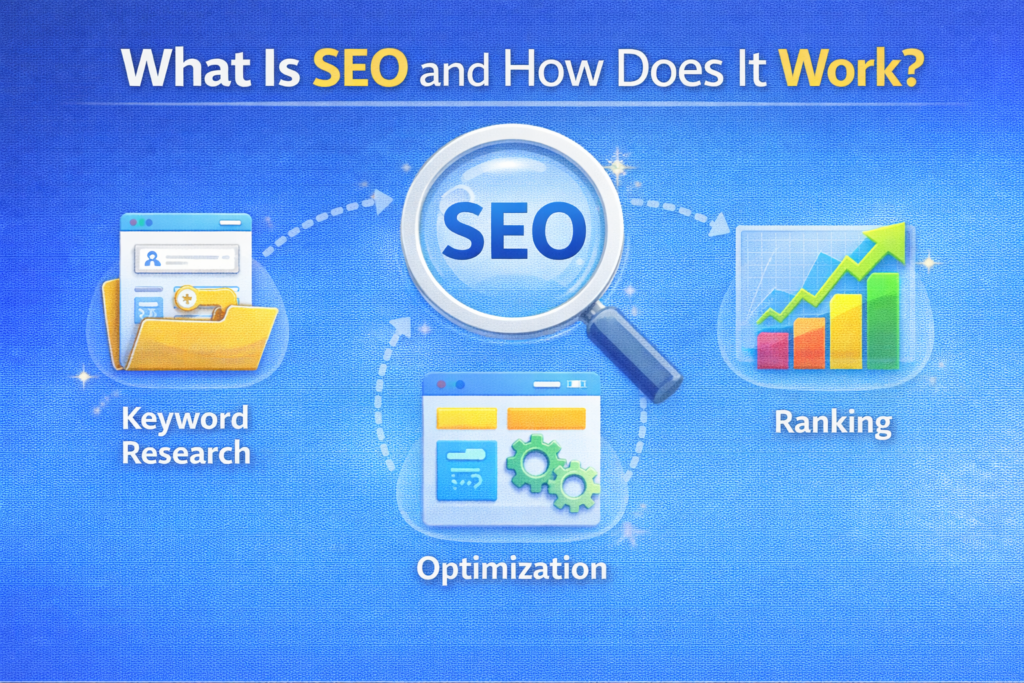
In today’s digital-first world, having a website is no longer enough. Your potential customers are searching on Google every day, and if your business is not showing up when it matters, you are losing opportunities to competitors who are more visible online. This is where an SEO company comes into the picture. However, many business owners still feel confused about what an SEO company actually does and how to choose the right partner. SEO is often misunderstood, sometimes oversold, and occasionally delivered poorly. In this article, we will break down the core services an SEO company provides and explain how you can confidently select the right one for your business goals. What Is SEO and Why Does It Matter? Search engine optimization is the process of improving your website so it appears higher in search engine results when users search for relevant keywords. The goal is simple: increase visibility, attract qualified traffic, and convert that traffic into leads or sales. Unlike paid advertising, SEO focuses on long-term growth. When done correctly, it helps your business build authority, trust, and consistent organic traffic without relying entirely on ads. An experienced SEO services company does not just chase rankings. It works on aligning your website with user intent, technical performance, and search engine guidelines to create sustainable growth. Core Services Provided by an SEO Company A professional SEO company offers a combination of technical, strategic, and content-related services. Let’s look at the most important ones. 1. Website Audit and SEO Analysis Every SEO campaign begins with a detailed website audit. This helps identify issues that may be holding your site back, such as slow page speed, broken links, duplicate content, or poor site structure. The audit also evaluates how your website compares to competitors, which keywords you currently rank for, and where the biggest opportunities lie. This step creates the foundation for an effective SEO strategy. 2. Keyword Research and Search Intent Mapping Keyword research goes far beyond finding high-volume search terms. A good SEO team focuses on understanding user intent: whether the user wants information, a service, or a product. By mapping keywords to the right pages, an SEO service provider ensures that your content answers real user queries and matches what search engines want to show. This prevents keyword cannibalization and helps each page perform its intended role. 3. On-Page SEO Optimization On-page SEO focuses on optimizing individual pages so they are clear, relevant, and search-engine friendly. This includes optimizing title tags, meta descriptions, headings, internal links, and content structure. Content quality is a major part of on-page SEO. Pages need to be helpful, readable, and written for humans first while still aligning with search engine requirements. 4. Technical SEO Technical SEO ensures that search engines can crawl, index, and understand your website properly. This includes fixing issues related to site speed, mobile usability, structured data, XML sitemaps, canonical tags, and HTTPS security. Without strong technical SEO, even the best content may struggle to rank. This is why experienced teams prioritize technical health as part of ongoing optimization. 5. Content Strategy and Creation Content is one of the most powerful tools in SEO. A strong content strategy helps attract users at different stages of the buying journey, from awareness to decision-making. An SEO company often helps with blog planning, service page optimization, and content updates to ensure relevance over time. The goal is not just to publish content, but to publish content that ranks and converts. 6. Link Building and Authority Growth Search engines view backlinks as signals of trust and authority. Ethical link building involves earning links from reputable websites through content, outreach, and digital PR. A reliable SEO services company avoids spammy or risky tactics and focuses on long-term authority building that protects your website from penalties. 7. Local SEO Optimization For businesses that serve specific geographic areas, local SEO services are essential. This includes optimizing Google Business Profiles, local citations, location pages, and reviews. Local SEO helps businesses appear in map results and location-based searches, driving more calls, visits, and inquiries from nearby customers. 8. Performance Tracking and Reporting SEO is data-driven. Professional agencies track keyword rankings, traffic growth, conversions, and user behavior to measure progress. Clear reporting helps you understand what is working, what needs improvement, and how SEO is contributing to your business objectives. How to Pick the Right SEO Company Choosing the right SEO partner can make a significant difference in your results. Here are the key factors to consider. 1. Look for Transparency, Not Promises Be cautious of agencies that promise guaranteed rankings or instant results. SEO is influenced by many factors, and no one can control search engines. A trustworthy SEO company explains its process clearly, sets realistic expectations, and focuses on measurable growth rather than shortcuts. 2. Check Experience and Case Studies Experience matters. Ask for examples of previous work, industries served, and results achieved. A strong track record shows that the agency understands different business models and challenges. Case studies and client testimonials can provide insight into how the agency approaches strategy and problem-solving. 3. Understand Their SEO Approach Ask how the agency plans to improve your website. Do they focus on user experience, content quality, and technical health, or do they rely on outdated tactics? A reliable SEO service provider follows search engine guidelines and adapts strategies as algorithms evolve. 4. Communication and Reporting Style SEO is an ongoing process, so communication is crucial. Make sure the agency provides regular updates and explains results in a way that makes sense to you. You should feel informed and confident, not confused by jargon or vague explanations. 5. Custom Strategy Over One-Size-Fits-All Every business is different. Avoid agencies that offer identical packages without understanding your goals, audience, and competition. The right SEO company builds a strategy tailored to your business needs, not a generic checklist. Why Partnering With the Right SEO Company Matters SEO is an investment in your brand’s long-term growth. When done right, it brings consistent traffic, qualified

Uncategorized

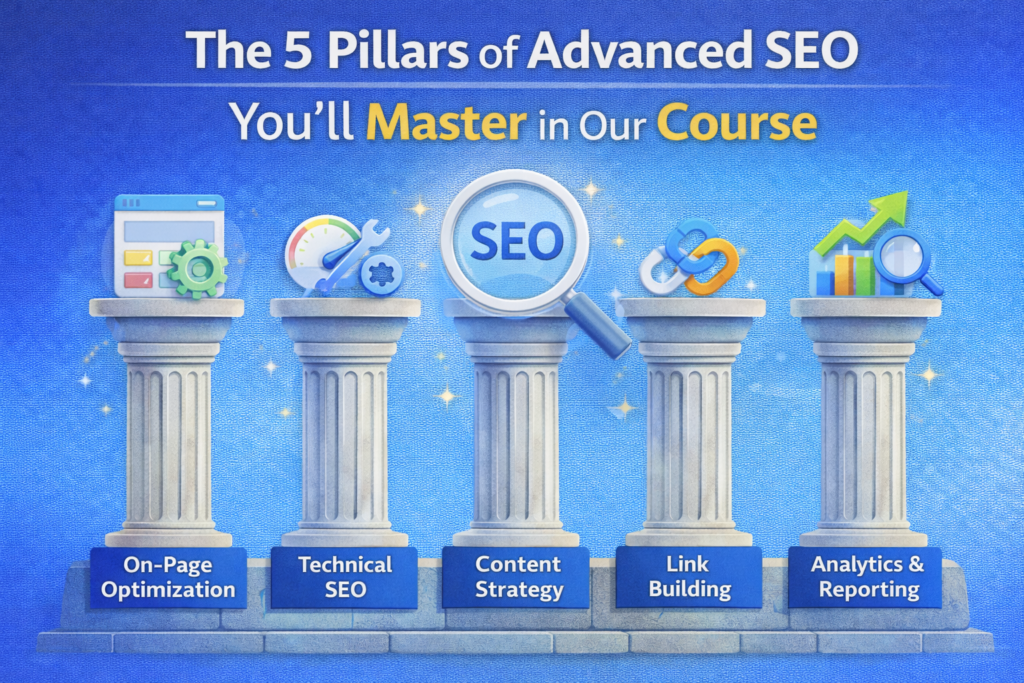
The 5 Pillars of Advanced SEO You’ll Master in Our Course

Advanced SEO encompasses many facets, but at its core are five fundamental pillars that every expert should master. 1. Technical SEO: The backbone of SEO success starts with a crawlable and indexable website. This includes optimizing site architecture, improving page speed, fixing broken links, and enhancing Core Web Vitals to meet Google’s user experience benchmarks. 2. On-Page SEO: Perfecting keywords is just the start. Advanced on-page SEO involves crafting meta tags, using schema markup to enhance search results, and aligning content strategy with user intent for better engagement and rankings. 3. Link Building: High-quality backlinks remain a powerful ranking signal. Our course teaches ethical strategies for acquiring authoritative links through outreach, content marketing, and relationship building, avoiding black-hat tactics that risk penalties. 4. SEO Analytics: Skills in Google Analytics, Google Search Console, and other SEO tools help you measure performance, track conversions, and make data-driven decisions to refine your strategy continuously. 5. SEO Audits & Troubleshooting: One of the toughest but most rewarding skills. You’ll learn how to conduct comprehensive SEO audits identifying issues and opportunities, followed by prioritized fixes that improve traffic and rankings. Mastering these pillars enables you to deliver holistic SEO solutions that drive sustained business growth. Join our Advanced SEO course to gain practical knowledge and hands-on experience in all these areas.

Uncategorized

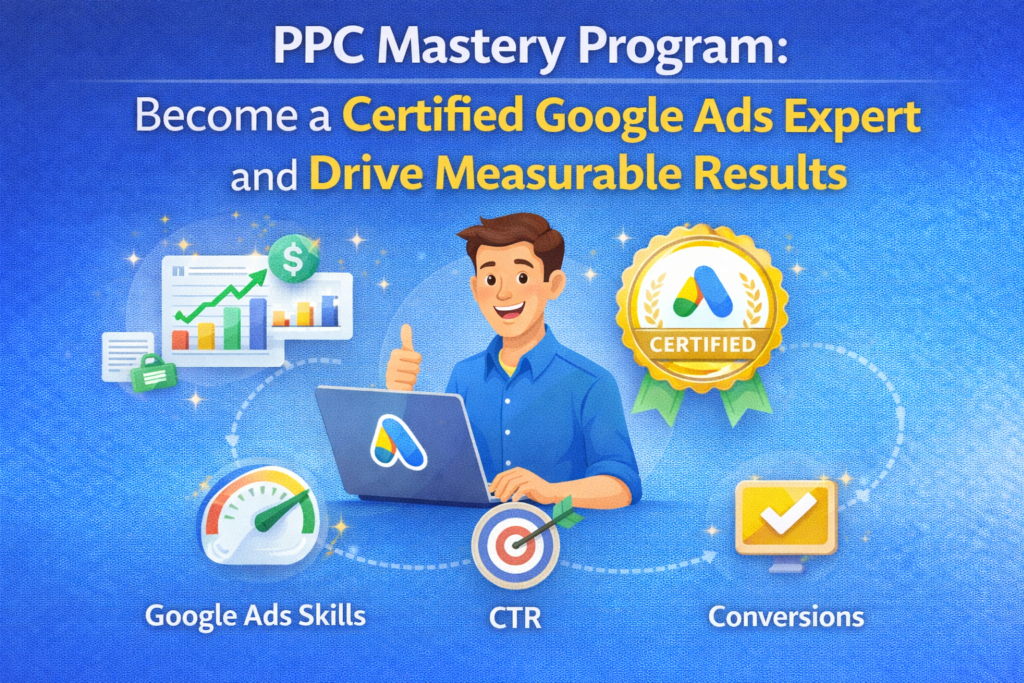
PPC Mastery Program: Become a Certified Google Ads Expert and Drive Measurable Results

Pay-Per-Click (PPC) advertising remains one of the most effective digital marketing tactics to drive targeted traffic, generate leads, and boost sales. But managing PPC campaigns successfully requires much more than just setting up ads. It demands deep knowledge of bidding strategies, keywords, audience targeting, and continuous optimization to ensure every advertising rupee delivers a solid return on investment. Our PPC Mastery Program is designed to equip you with the skills and expertise to become a Google Ads certified professional with hands-on campaign management experience. Whether you’re an aspiring digital marketer, freelancer, or business owner, this program takes you from beginner to expert in real-world PPC advertising. What You Will Learn Why Choose Our PPC Mastery Program? Practical, project-based learning sets this program apart. Our students work with real budgets and live campaigns under expert mentorship, gaining hands-on knowledge that theory cannot deliver. Plus, our supportive career assistance helps you prepare for interviews and freelance client pitches. Who Should Enroll? Career Opportunities Graduates often find roles as PPC Campaign Managers, Paid Media Specialists, Digital Advertising Analysts, or skilled freelancers. The demand for certified PPC experts continues to rise as more businesses prioritize paid search in their marketing mix. Ready to Master PPC Advertising? Join our PPC Mastery Program and take control of digital advertising campaigns with confidence. Contact us today to learn about batch schedules, fees, and enrollment steps.

Uncategorized

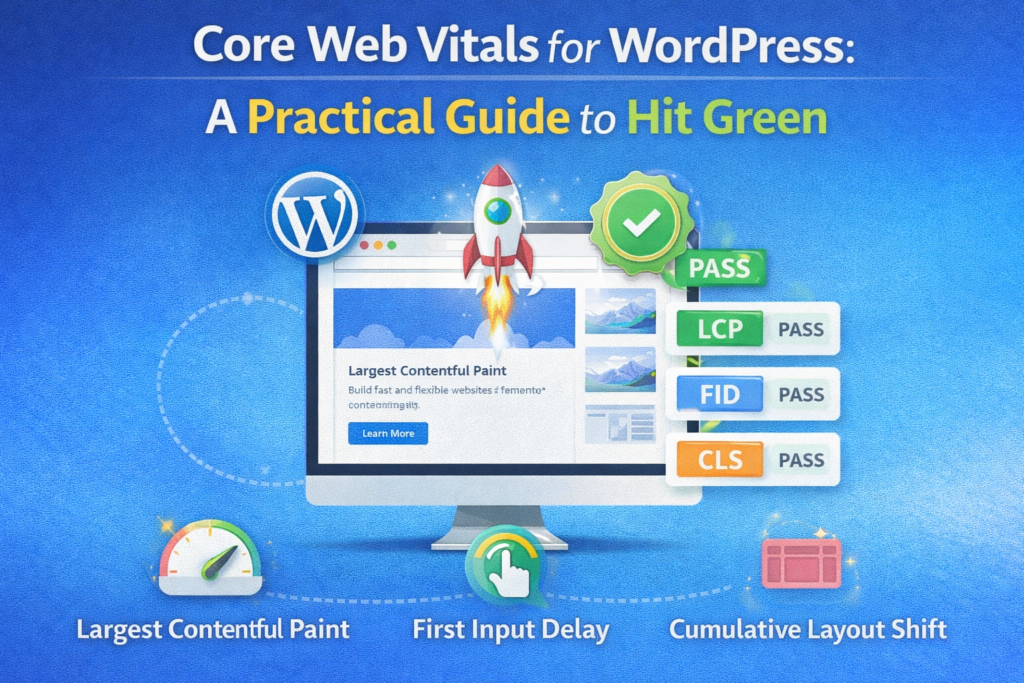
Core Web Vitals for WordPress: A Practical Guide to Hit Green

Google’s Core Web Vitals have emerged as essential benchmarks for website performance, especially for WordPress sites. These metrics measure how users experience your site — focusing on loading speed, visual stability, and interactivity — which directly impact both SEO rankings and user conversions. If your WordPress website feels slow or shifts unpredictably during loading, it can hurt your visibility and business growth. This guide breaks down Core Web Vitals in simple terms and offers practical tips to transform your site from “yellow” to “green.” Understanding Core Web Vitals Core Web Vitals revolve around three key user experience pillars: Simply put, LCP is about loading, CLS is about stability, and INP is responsiveness. Above-The-Fold Strategy Matters The first visible section of your site, known as above the fold, greatly influences Core Web Vital scores. Optimizing this area by inlining critical CSS, lazy-loading images and videos below the fold, and preloading key assets like your hero image and main font can significantly improve user-perceived load time. Keeping your hero section’s HTML early in the DOM ensures it renders faster. Managing Scripts Wisely WordPress themes and plugins often load unnecessary JavaScript site-wide, dragging down performance. Use plugin managers like Asset CleanUp or Perfmatters to disable scripts on pages where they’re not needed and defer non-critical JavaScript. Avoid heavy animations from page builders by replacing them with CSS or lightweight alternatives. Real-User Monitoring for Lasting Performance Lab tools like PageSpeed Insights help diagnose issues, but real-user data from Google Search Console’s Core Web Vitals report or services like Cloudflare Observatory provide the actual experience of your visitors. Regularly review these reports, prioritize the worst-performing pages, and apply fixes sitewide. Case Study: WordPress Agency Site By compressing hero images, lazy-loading media, deferring Elementor animations, removing unused fonts, and caching with Cloudflare APO, a mid-sized WordPress agency portfolio saw: This boost led to a 23% increase in session duration and 17% higher conversions in two weeks. Final Takeaway Core Web Vitals are more than SEO checkboxes—they are vital for excellent user experience. Fast-loading, visually stable, and responsive WordPress sites engage users longer and convert better. Partner with DDM Informatics to optimize your WordPress site’s Core Web Vitals and drive measurable growth.  

Uncategorized

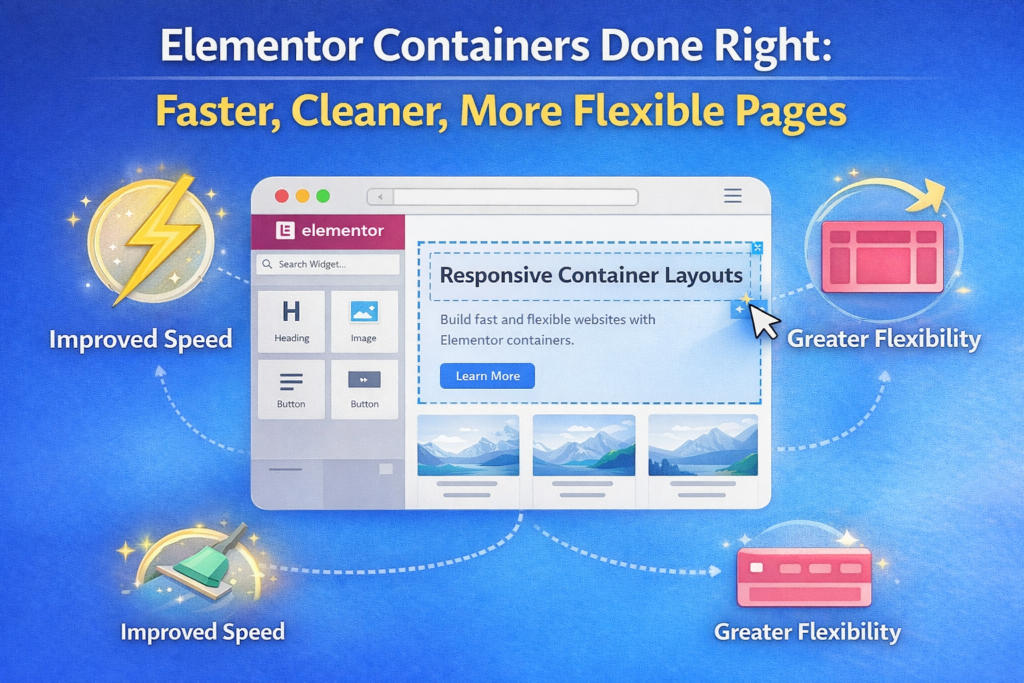
Elementor Containers Done Right: Faster, Cleaner, More Flexible Pages

Elementor containers are revolutionizing how websites are built with the popular WordPress page builder. By leveraging modern CSS Flexbox layouts, containers provide a cleaner, more efficient structure compared to the traditional sections and columns of old. When used correctly, Elementor containers not only improve your page speed and SEO but also offer greater flexibility to design responsive, user-friendly layouts. Why Containers Matter for Performance Traditional Elementor layouts rely heavily on nested sections, columns, and inner-sections, often producing bloated HTML with many unnecessary div elements. This bulky DOM increases page size, slows rendering, and negatively impacts Core Web Vitals — crucial ranking factors for Google. Containers use Flexbox CSS to simplify the page structure drastically. A single container can replace multiple nested elements, reducing the total number of DOM nodes, CSS, and JavaScript loaded. The outcome? Faster load times, better responsiveness, and improved SEO performance. Best Practices for Using Elementor Containers Minimize Container Count Avoid overusing containers. Keeping container usage to a necessary minimum prevents excess CSS and JS files from loading. Elementor recommends roughly 20 containers or fewer per page for optimal performance. Create Flexible, Responsive Layouts Use Flexbox containers to build layouts that adapt seamlessly across devices. Containers automatically handle alignment, spacing, and distribution between child elements, making mobile optimization easier and more efficient. Avoid Excess Nesting Deeply nested containers increase DOM complexity and slow down rendering. Keep nesting shallow and use containers to group related content logically without unnecessary wrappers. Manage Container Order and Hierarchy Place important content higher in the container structure to improve crawlability by search engines. Use clear content hierarchy with headings and subheadings within containers to enhance both SEO and user experience. Optimize Spacing Properly manage padding and margins between containers to avoid visual layout shifts that can hurt user experience and CLS (Cumulative Layout Shift) scores. Advanced Tips for Container Optimization The Result: Cleaner Code, Faster Pages, Happier Users Switching to Elementor containers done right produces websites that are not only visually stunning but also highly performant and scalable. Reduced DOM complexity translates into faster time to interactive, smoother scrolling, and higher Core Web Vital scores, all of which contribute to better SEO rankings and superior user engagement. Elementor containers are a powerful tool for building WordPress sites that meet modern performance standards. By following container best practices, web creators can deliver faster, cleaner, and more flexible pages that delight users and search engines alike.

Uncategorized

Community Management SOP: From First Comment to Loyal Fan

Building a thriving online community is more than just answering comments—it’s about creating lasting relationships that turn casual visitors into loyal fans. An effective Community Management Standard Operating Procedure (SOP) ensures consistent, meaningful engagement at every step, optimizing your brand’s online presence and fostering real connections. Why Community Management Matters Online communities are the heart of modern brands. They boost engagement, enhance trust, and drive organic growth. But managing community interactions manually without a structured approach leads to missed opportunities, inconsistent replies, and disengaged followers. A well-crafted SOP empowers teams to handle every comment, question, or feedback with professionalism and empathy, building long-term loyalty. Step 1: Respond Promptly to Every Comment Time is of the essence. Responding within 1-2 hours shows you value your community’s input and keeps conversations alive. Even a simple acknowledgment like “Thanks for reaching out!” sparks goodwill and encourages further interaction. Step 2: Personalize Your Engagement Avoid robotic or generic answers. Use commenters’ names and address their specific points to build trust. Genuine responses demonstrate that you’re listening, not just broadcasting. Step 3: Add Value in Every Interaction Whether answering questions or sharing advice, ensure each interaction offers clear value. Helpful responses position your brand as an expert and a helpful partner, encouraging followers to engage repeatedly. Step 4: Spark Conversations with Open-Ended Questions Encourage deeper dialogue by asking open-ended questions related to your content. For instance, “What do you think about this feature?” This not only strengthens community bonds but improves social reach as engagement grows. Step 5: Handle Negative Feedback with Grace Conflict is inevitable, but how you respond can make or break your reputation. Address negative comments professionally, acknowledge concerns honestly, and offer to resolve issues offline when necessary. Transparency helps maintain trust. Step 6: Recognize and Reward Your Best Fans Publicly acknowledge and reward loyal community members. Shout-outs, badges, or exclusive offers motivate contributors to stay engaged and inspire others to participate actively. Step 7: Monitor Trends and Adjust Strategy Analyze recurring questions, sentiments, and topics within the community. Use these insights to refine your content and support strategies so your community feels heard and valued. Step 8: Promote User-Generated Content Encourage followers to share their experiences, reviews, or creations related to your brand. Highlight their posts to promote authenticity and deepen engagement. Step 9: Maintain a Consistent Brand Voice and Guidelines Stay consistent in tone and behavior guidelines across all platforms. Consistency fosters familiarity and a safe environment that encourages positive interactions. Step 10: Measure Success and Iterate Track key performance indicators like engagement rate, follower growth, and sentiment analysis. Use data-driven learnings to continuously improve your community management SOP. Conclusion Community management isn’t just about managing comments—it’s a strategic process that nurtures relationships, builds trust, and cultivates brand loyalty. By following this SOP from the first comment to ongoing engagement, brands can transform casual visitors into passionate advocates who contribute to long-term success.  

Uncategorized

Meta Ads Basics for Lead Gen: Forms vs. Landing Pages (And When to Use Each)

When it comes to generating leads with Meta Ads (formerly Facebook Ads), one key decision can shape your entire campaign strategy: should you capture leads directly within the ad using Instant Forms, or send users to a dedicated landing page? Both methods are powerful but best suited to different goals, audiences, and sales funnels. Understanding the strengths and limitations of each approach helps you optimize for the right kind of leads, reduce wasted spend, and improve your return on investment (ROI). Here’s a practical breakdown of when to use Instant Forms versus landing pages, along with tips on measurement, attribution, budgeting, and follow-up. Instant Forms: Fast, Frictionless Lead Capture on Platform Meta’s Instant Forms keep users inside Facebook or Instagram during lead capture, which means less friction and faster submissions. Instant Forms Pros: Instant Forms Cons: Best Use Cases: Ideal for quickly testing new offers, local businesses looking for volume, or awareness-stage campaigns where a large pool of contacts is needed. Landing Pages: Control, Context, and Qualification When you need more qualified, higher-intent leads, sending users to a dedicated landing page often performs better. Landing Page Advantages: Landing Page Tips: Best Use Cases: Great for mid- to lower-funnel offers such as consultations, demos, paid services, or complex products requiring more information and trust-building. Navigating Attribution Challenges Attribution between Instant Forms and landing pages can be tricky, especially when syncing CRM data with Meta Ads manager. Delayed conversions, cross-device issues, and privacy changes (like iOS 14+) add complexity. How to Fix Attribution Issues: Marking lead sources as “Form” or “Page” in your CRM helps analyze lead quality by origin. Budgeting and Testing Strategy Don’t guess which method works best—test them side by side. Suggested Starting Budget Split: Run your tests for at least 2-3 weeks to gather meaningful data. Track not just CPL but also lead quality and sales-qualified leads (SQLs). Variable Option A Option B Lead Flow Instant Form Landing Page Offer Type Free Quote Free Demo Objective Leads Conversions Follow-Up Auto Email Sales Call Metric to Track CPL SQL % Scale whichever channel delivers more qualified leads at lower cost per qualified lead (CPQL). Follow-Up Speed: The Secret Sauce No ad or form can fix a slow response time. Responding to leads within 5 minutes can increase conversion rates dramatically; after 30 minutes, chances drop by up to 80%. Effective Follow-Up Framework: Pro tip: Use Meta’s “Instant Form + Call Extension” combo to prompt immediate phone calls for high-value leads.

Scroll to Top
Seraphinite AcceleratorOptimized by Seraphinite Accelerator
Turns on site high speed to be attractive for people and search engines.